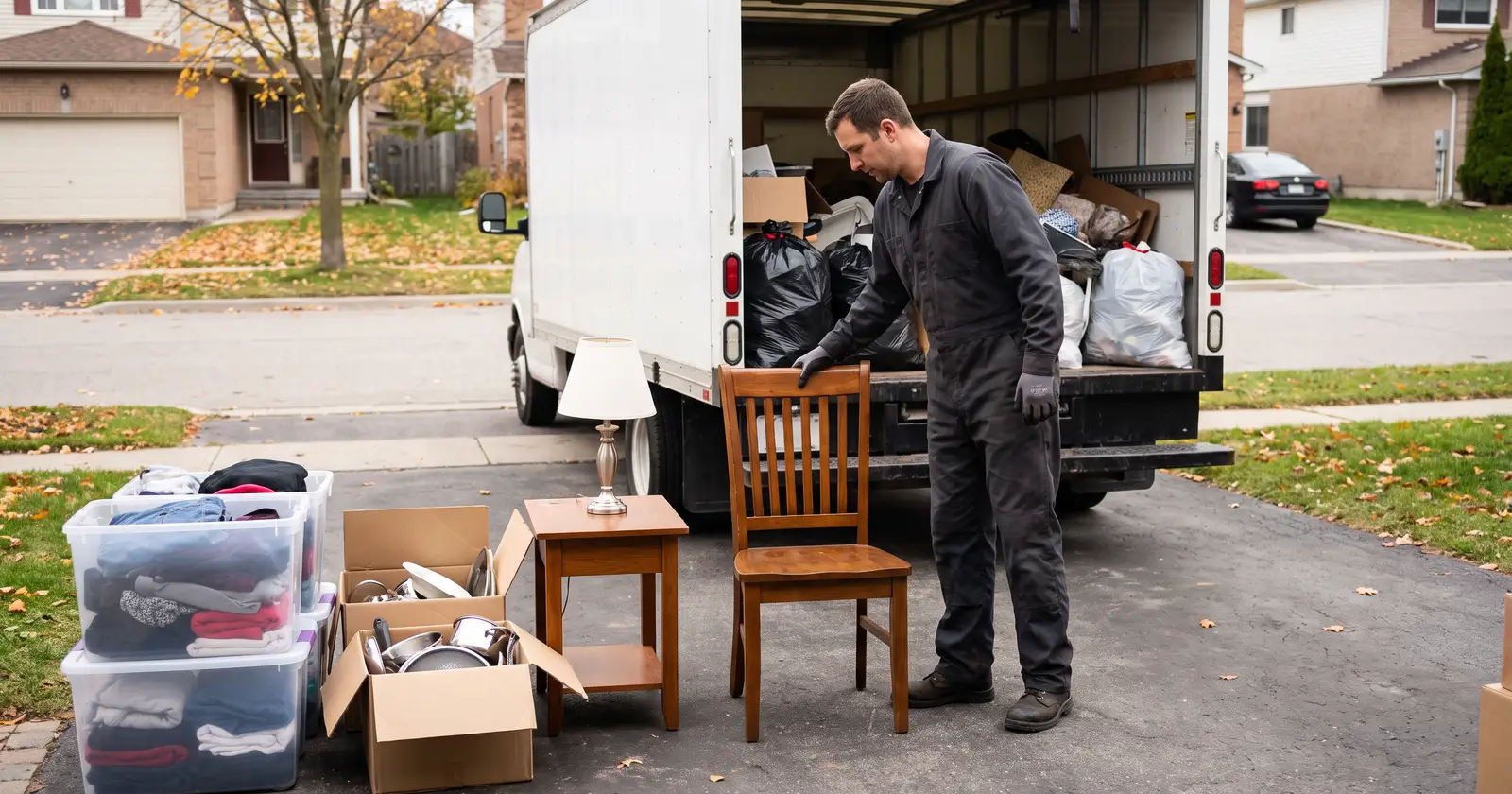
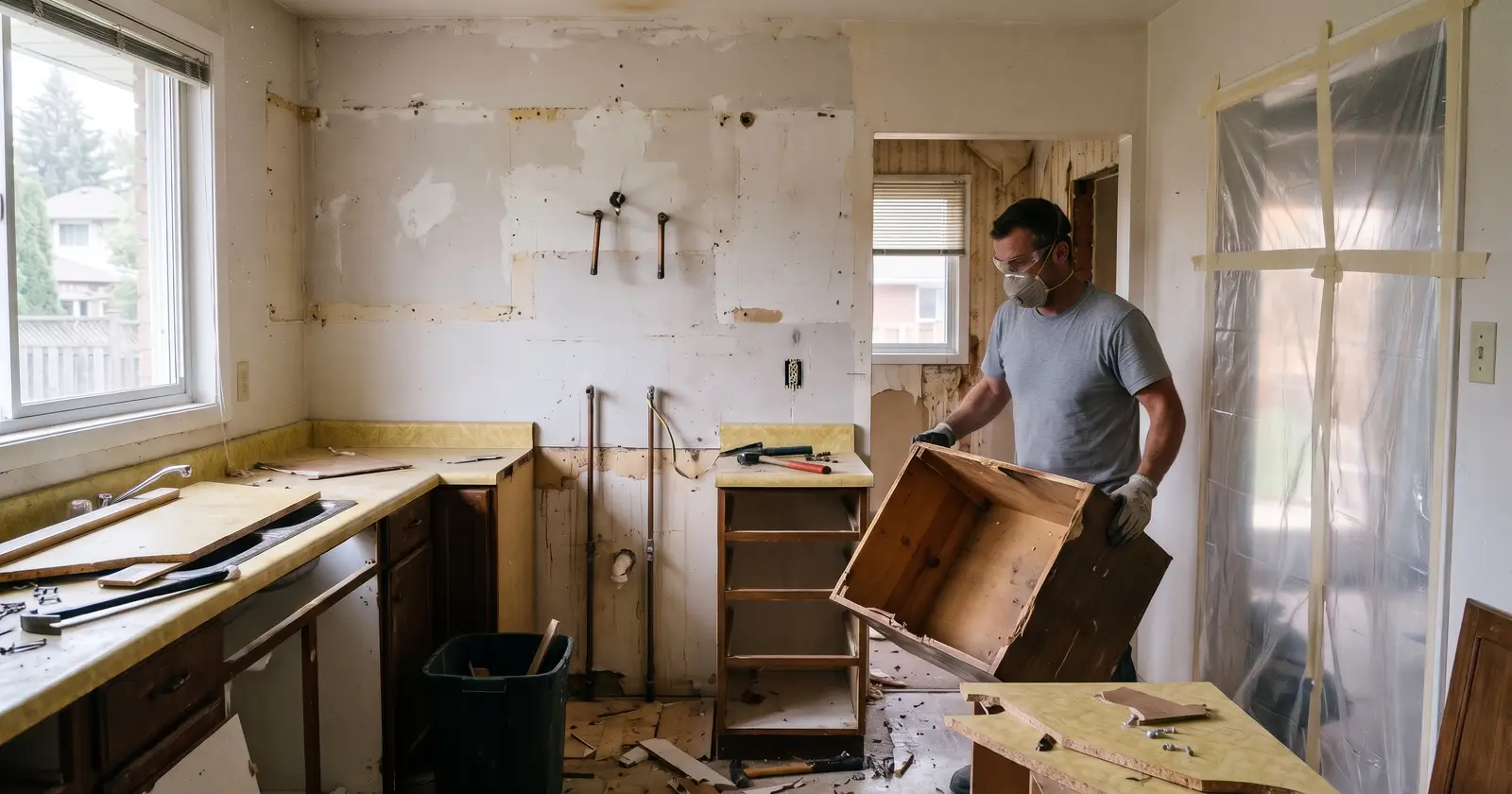
A kitchen demolition removes the old cabinets, counters, flooring and fixtures so the next trades can start. CHUCK-IT's demolition crew in Pickering does kitchen tear-outs for homeowners and general contractors, visits first, gives a flat-rate quote, and hauls the debris away. Ask your municipality about permits before work starts.
Why demolition comes first
Every kitchen renovation starts with taking the old one out. The plumber, electrician and installers need clear walls and floors to work. If tear-out is slow or messy, everything after it slips.
A dedicated demo crew keeps that first step simple. The crew does the removal, takes the waste with it, and leaves a clean space. Your contractor can then focus on the new kitchen.
Who hires us
CHUCK-IT works with homeowners, businesses, property owners and general contractors. Bookings tend to come two ways:
- Some customers hire us directly.
- Others have their contractor book us for the tear-out so the schedule lines up.
What a kitchen tear-out involves
Every kitchen is different, but most tear-outs include some or all of these:
- Upper and lower cabinets
- Countertops and backsplash
- Flooring
- Sinks, taps and fixtures that are being replaced
- Appliances that are going out
- Interior walls, if the layout is changing
- Soffits and trim
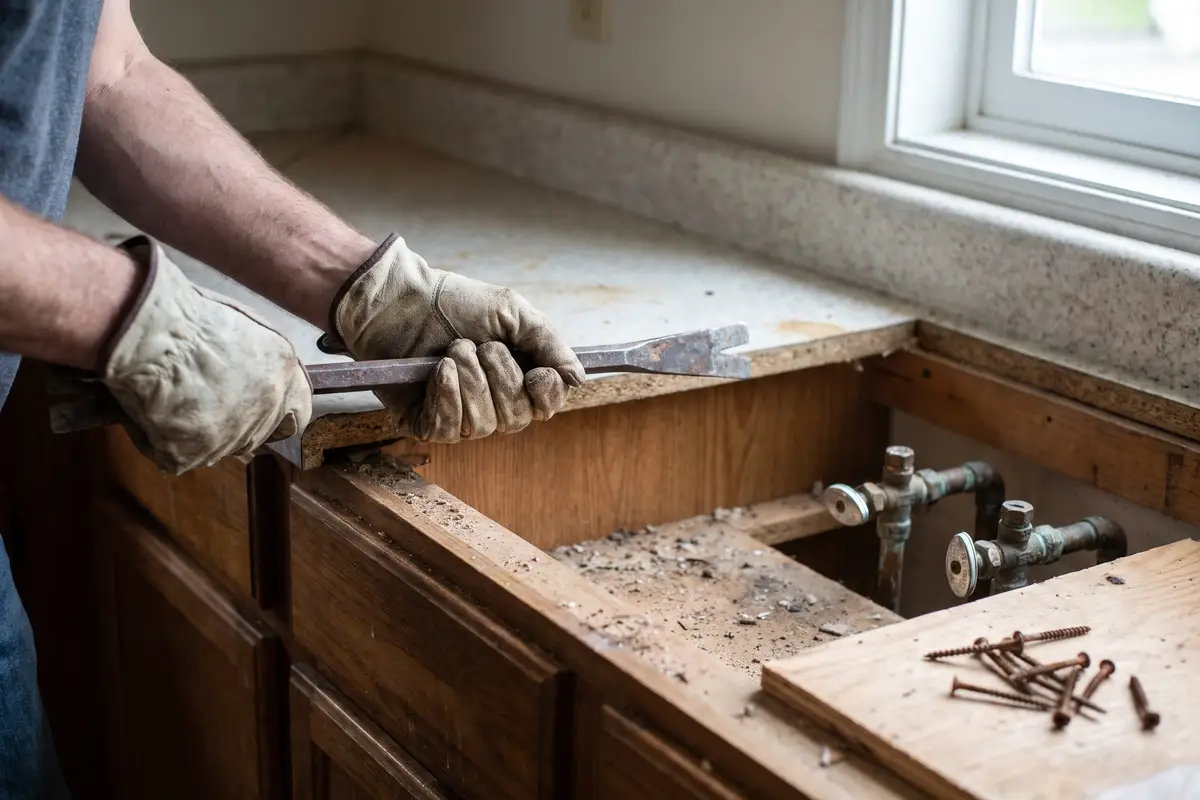
The crew works carefully around what is staying. If you are keeping a wall, a window or a floor, say so at the walkthrough. A crew member marks it, and the plan follows.
The walkthrough and the quote
A demolition quote should come after someone has seen the kitchen. At CHUCK-IT, a crew member visits your home, looks at the scope, the materials and the access, and then gives a flat-rate quote.
Things the crew looks at:
- How many cabinets and how much counter there is
- What the counters and floors are made of
- Whether walls are coming down
- How far it is from the kitchen to the door and the truck
- Whether there are stairs on the way out
- What else you want removed, such as old appliances
You approve the quote before any work begins. If you are unsure about something, ask at this stage, not on the day.
What affects the price
Several things move a kitchen demolition quote. None of them are mysterious once you see the room:
- Size of the kitchen. More cabinets and more floor take more time.
- Materials. Tile, laminate, stone and plaster each take different effort.
- Walls. Taking out a wall is more work than taking out cabinets alone.
- Access. Stairs and long carries add time.
- Debris. Hauling away the waste is part of the plan.
We do not publish a price list, because two kitchens that look alike can be very different once you open them up. A walkthrough settles it.
Permits and rules
Rules depend on the job and the municipality. Taking out cabinets is usually different from removing a wall, and the rules for each can vary. Contact the City of Pickering's building department before work starts and ask what applies to your project.
If you live in a condo, check with your property manager as well. Many buildings have rules about noise hours, elevator use and debris. Tell the crew what you learn at the walkthrough so the plan matches the rules.
Working with your contractor
If you have a general contractor, share the schedule. Tear-out should finish before the plumber and electrician arrive, and the debris should be gone so they have room.
Ask your contractor three questions:
- Who is handling demolition and debris removal?
- When does the next trade arrive?
- Is anything in the kitchen being kept or reused?
Our crew can fit around their timeline. The walkthrough is a good time for the contractor to join.
Debris removal
A kitchen tear-out creates more waste than people expect: cabinet boxes, countertops, flooring, old drywall and packaging. Demolition debris is part of CHUCK-IT's removal work, so the same company that takes the kitchen apart carries the waste out.
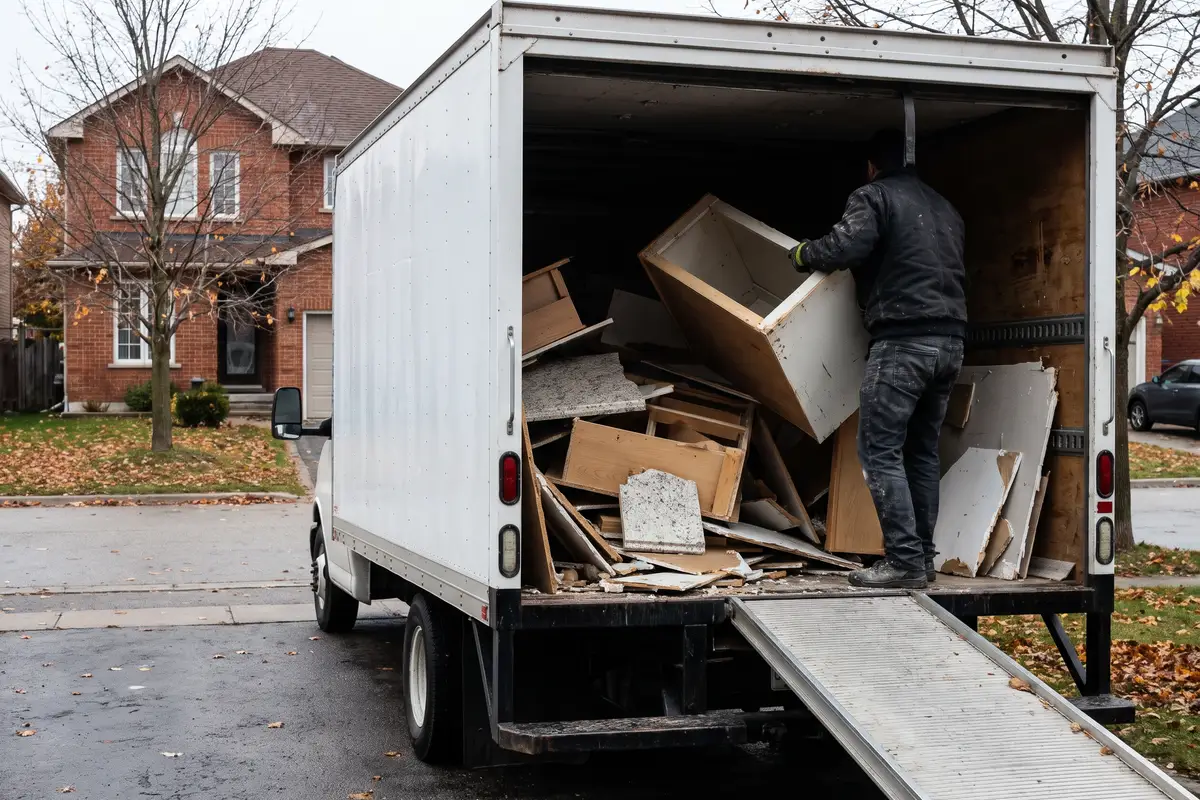
Materials that can be sorted for recycling are separated rather than sent straight to landfill. Appliances in good condition may be worth offering to someone else first. If you are replacing a working fridge or stove, mention it. Gently used items may be eligible for donation through our Durham Community Closet.
Preparing your home
A little preparation makes the day easier:
- Empty the cabinets and drawers.
- Move food, dishes and small items elsewhere.
- Clear a path from the kitchen to the door.
- Cover or move nearby furniture.
- Tell the crew about pets, children and anything fragile.
- Turn off or arrange for water and power to be disconnected by the right trade, if fixtures are coming out.
Plan where you will cook while the kitchen is out of use. That is a bigger adjustment than most people expect.
Mistakes to avoid
Most problems with tear-outs come from planning, not from the work itself. Watch for these:
- Booking demolition before you know whether a wall is coming down
- Forgetting to mention appliances that are leaving
- Leaving no clear path from the kitchen to the door
- Skipping the permit question and finding out later
- Having no plan for the debris, so it sits in the driveway
A short call with your contractor and a walkthrough with the demo crew covers all five. It takes less time than fixing one of them afterward.
Older Pickering homes
Pickering has older homes near Bay Ridges and Liverpool, and newer ones in Duffin Heights and Seaton. Older kitchens may have layers of flooring and walls that have been changed over the years. Newer kitchens are often simpler to open up. Either way, the walkthrough shows what is there.
Need Demolition in Pickering? CHUCK-IT Removal Services Is Ready to Help
If you are planning a kitchen renovation, start with a walkthrough. Our crew is based in Pickering and does demolition across Durham Region and the GTA, from kitchens and basements to decks and sheds. Call us at (905) 619-0000 or contact us today to book a visit. You can also read about demolition in Pickering or our wider demolition services.